 AA Global
 Why Your Entries Fail: The Fair Value Gap Entry (Free Guide)
Key takeaways
- A break alone means nothing, price can wick or even close through a level and reverse
- Wait for displacement: a fair value gap through the level
- Then wait for the retest, and only enter if it holds
- Stop goes beyond the retest candle, target at least 2 to 1
- The waiting is the strategy, missed moves cost nothing
- Pick better gaps: it must break a swing point, and never trade gaps in chop
- If price closes straight through the gap it inverts, and the same zone now works in the opposite direction
- An inverted gap is a setup, not a failure. Short the retest, stop above it, target the next marked level
- If no gap forms at all, trade the continuation through the level instead. No daily bias required
The one reason entries fail
You are entering on the break. This guide shows, frame by frame from the video, why the break is the trap and what to wait for instead.
Step 1: The setup everyone sees
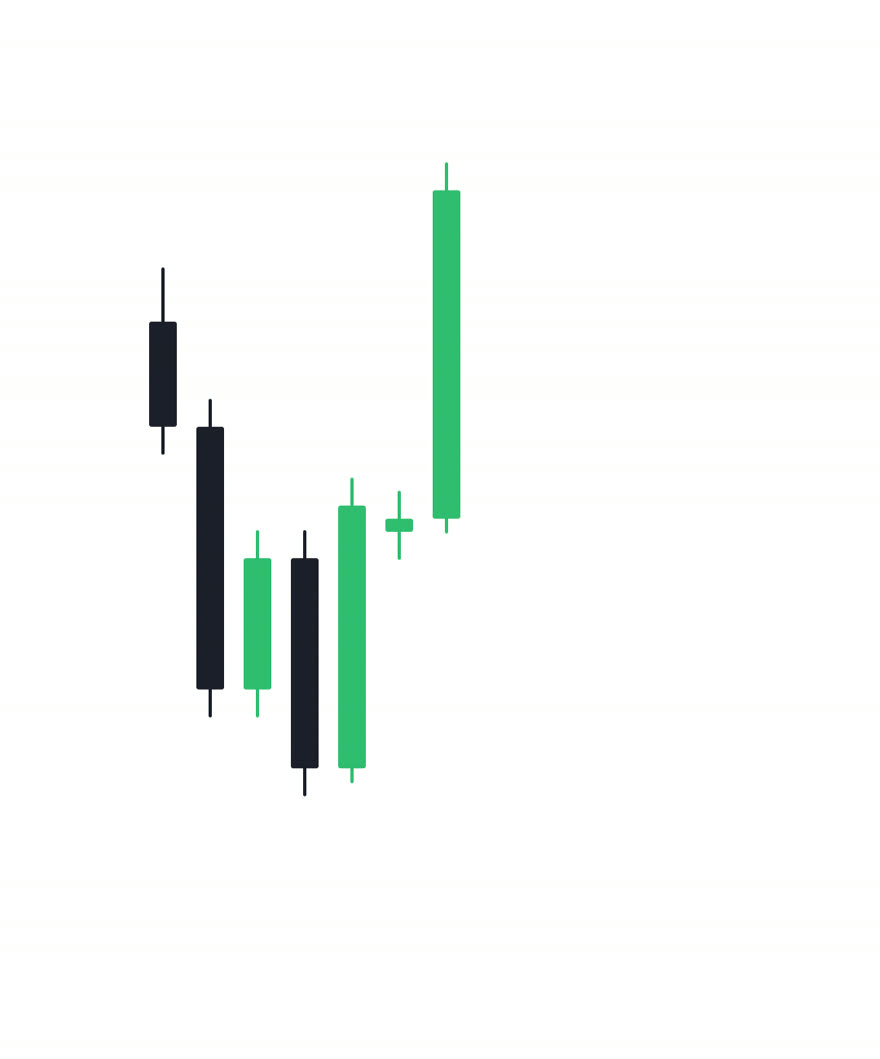
Price breaks a level and it looks like the move is leaving without you. That urgency is exactly what gets exploited.
Step 2: Why the break alone is a trap
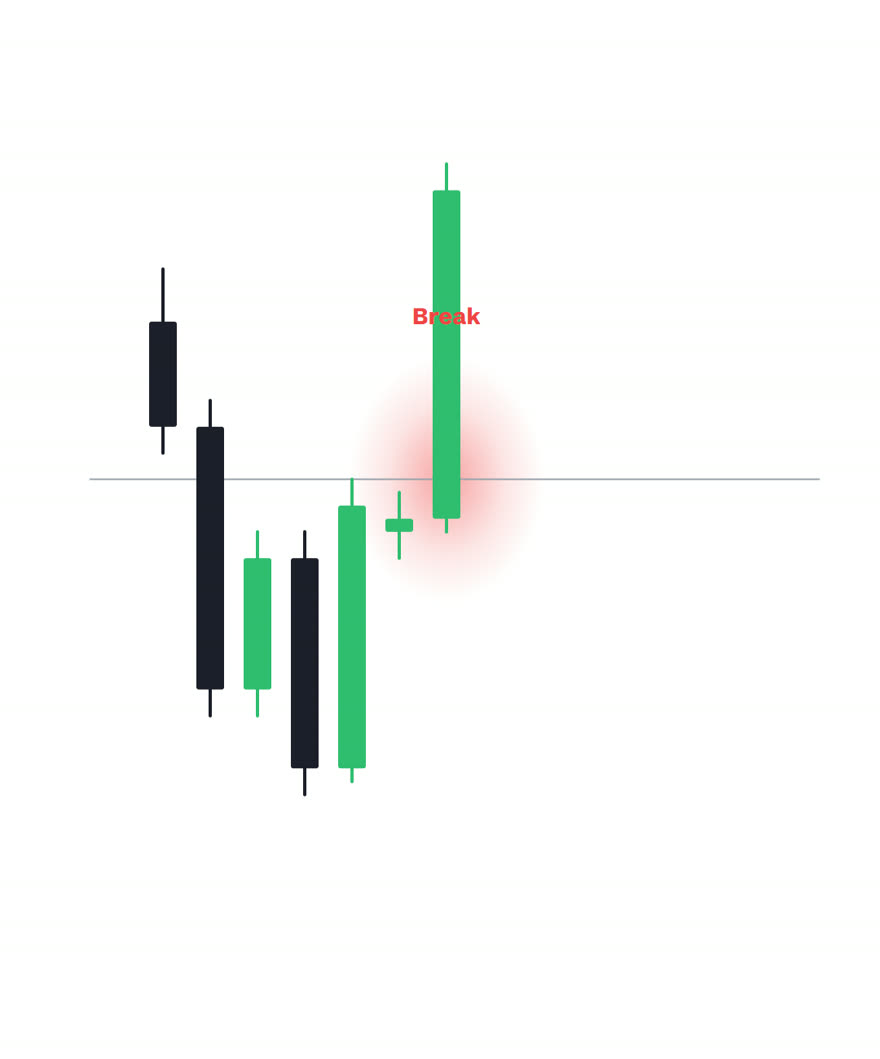
A break on its own means nothing. Price can wick through your level, it can even close through it, and still reverse straight back. Buying that break puts your stop exactly where the market goes hunting.
Step 3: Demand displacement
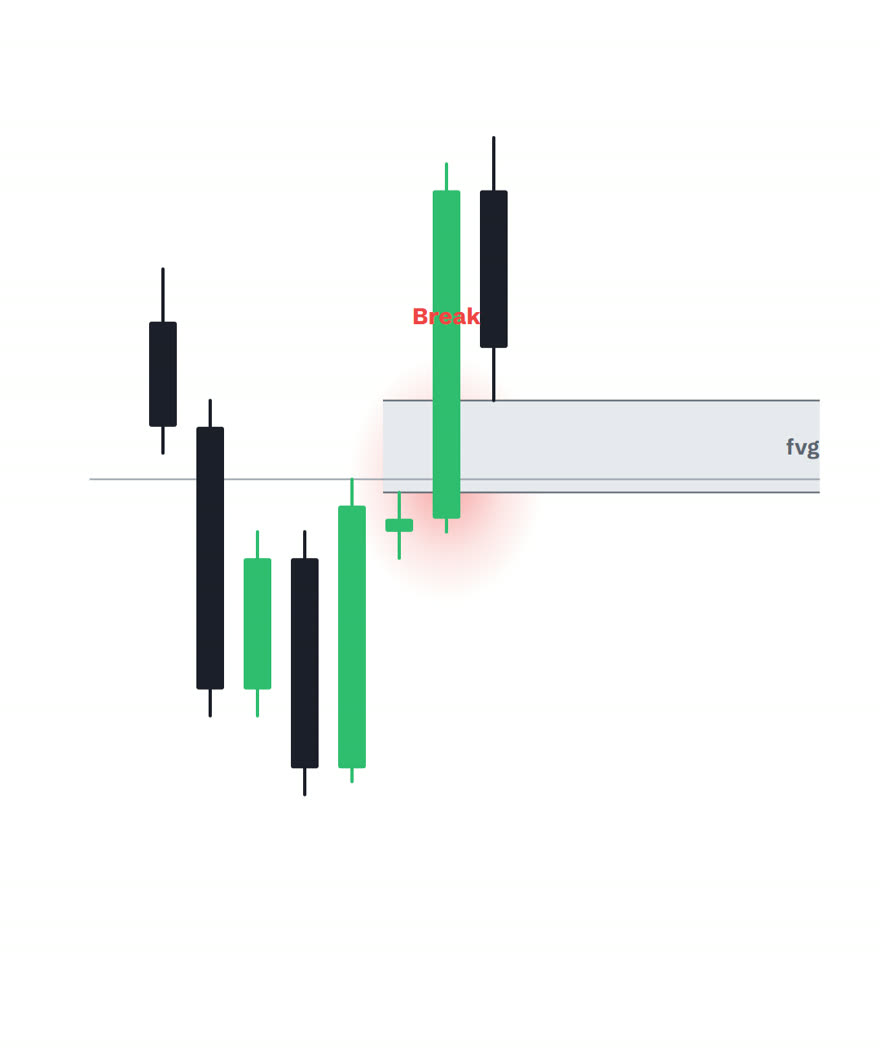
The fix is to demand evidence. Wait for displacement: a break so forceful it leaves a fair value gap, drawn here as the shaded zone running off the chart.
Step 4: Know the anatomy
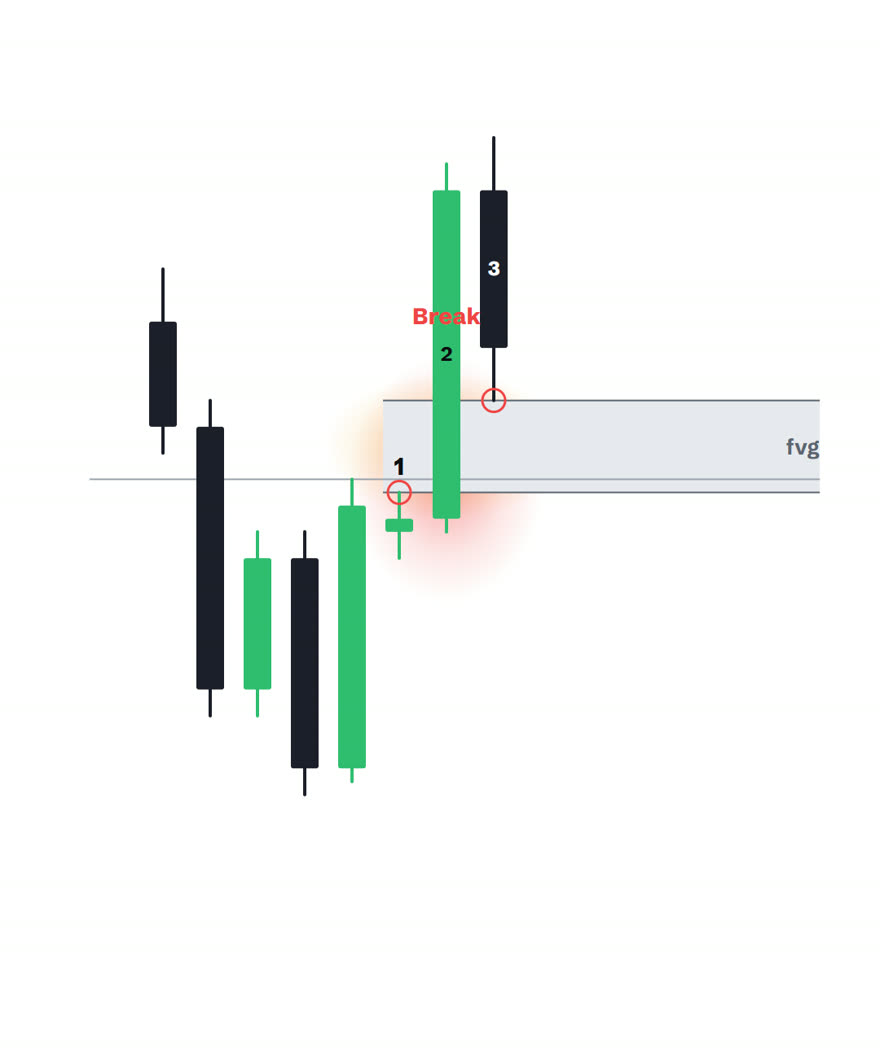
The fair value gap is a three candle pattern. Candle 2 moves with so much force that candle 1's wick and candle 3's wick never touch. That empty space tells you whether buyers or sellers are really in control, or whether it was just another fake out.
Step 5: Wait for the retest
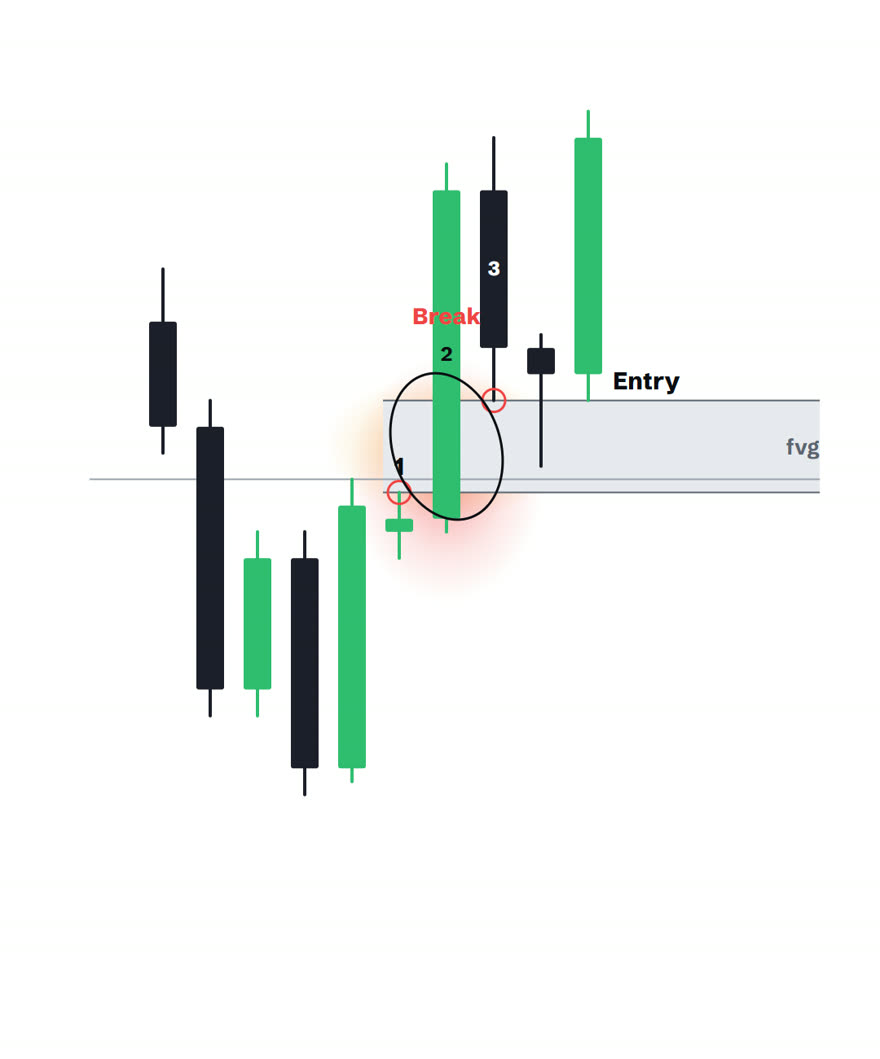
Once the gap prints, do nothing. Price pulls back to the level it just broke. If the retest holds, that is your confirmation and your entry. If it slices straight back through, the filter just saved you a loss.
Step 6: Fixed stop, fixed target
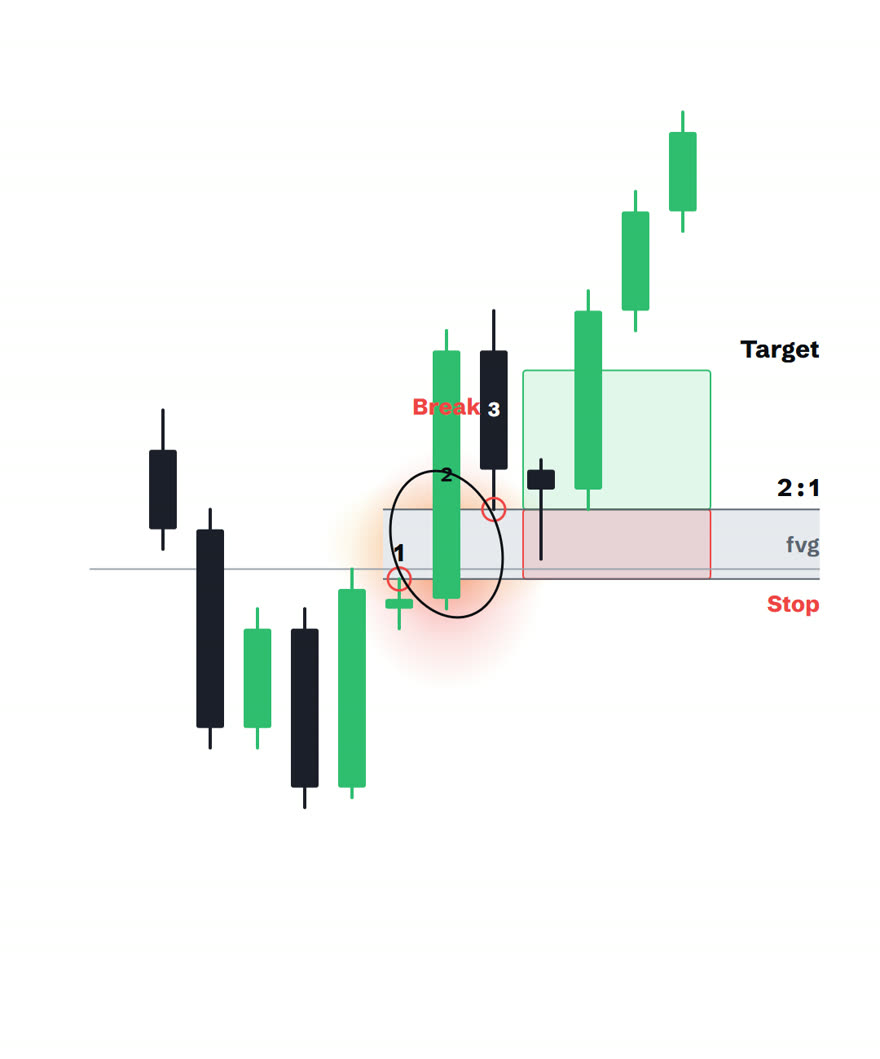
Stop goes beyond the retest candle. Target is a minimum of 2 to 1. Small defined risk, asymmetric reward, and no more donating your stop to false breakouts.
What if price never comes back to the gap?
The most asked question about this entry, so here is the full answer. Start with the honest frame: a missed trade costs you nothing, chasing costs you real money. Some moves leave without you, and that is the fee the filter charges. But "wait forever" is not your only tool. Five adjustments, in the order you should reach for them:
- 1. Split your entry across the gap. Do not put the whole order at the far edge and hope for a full retrace. Place half at the top of the gap and half at its 50% midpoint (traders call that midpoint the consequent encroachment, and it is the level partial pullbacks respect most). Shallow retests now fill your first half; if only one bite fills, you are in the move at half size instead of watching it.
- 2. Take the 50% touch as enough. Price frequently fills only half a gap before continuing. If your plan demands complete mitigation of the zone, you will miss those trades every time. The midpoint touch with a rejection is a valid fill of the idea.
- 3. Drop down a timeframe. A trend strong enough to leave without retracing keeps creating new, smaller fair value gaps as it goes. If the 15 minute gap never fills, go to the 5 minute or the 1 minute inside that same move and take the next gap there, on exactly the same rules: displacement, gap, retest, stop beyond the swing. You trade the continuation instead of chasing the departure.
- 4. Watch the level below the gap. When the pullback finally comes but slices through your gap, the next zone of interest is the origin of the whole move, the last opposite-coloured candle before the displacement (an order block). A deeper entry there often catches the retrace the gap was too shallow to hold.
- 5. If price closes back through the gap, the idea is dead. A gap that gets fully traded through and holds on the other side has inverted: it now acts like the flipped level in a support and resistance switch. Do not keep an order inside it. Stand down, or reassess in the opposite direction.
And one hard rule that protects all of it: give every pending order an expiry. A limit sitting in a gap is valid while the move that created it is fresh. If price prints a new extreme or several candles pass without a fill, cancel the order. Stale limits do not fill into the trade you planned, they fill into a different, usually failing one.
What you never do is market-buy the move because it left without you. Entering late "because it's running" is the breakout mistake from step 1 wearing a disguise.
When the gap fails: the inversion
Everything above assumes the gap holds. Often it does not, and what happens next is the part almost nobody teaches. A gap that gets broken does not stop mattering. It changes sides.
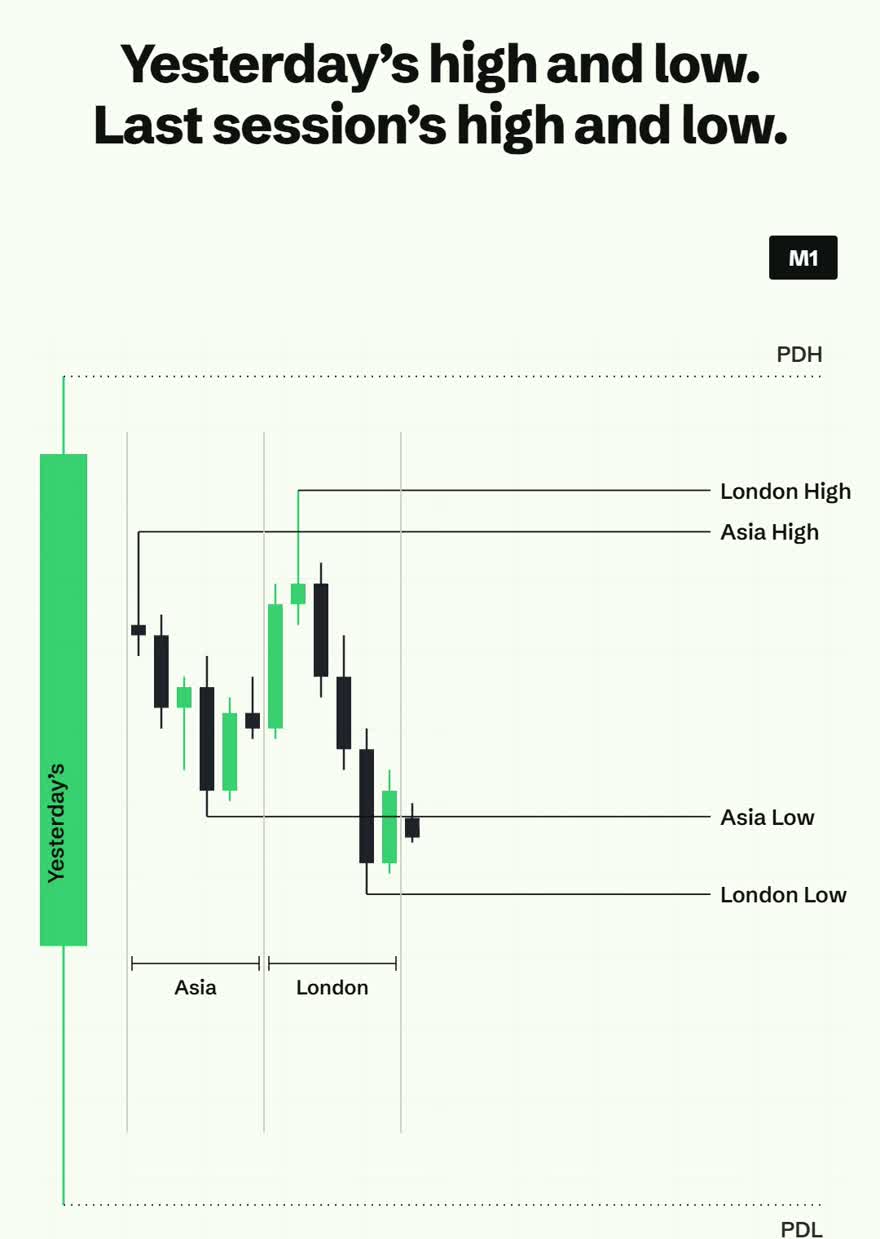
Start with the context. Mark yesterday's high and low, and the last session's high and low. Then wait for the 9:30 New York open. You do not need a daily bias for this, and that is the point. You are not predicting a direction, you are waiting to see which level gets taken and what price does afterwards.
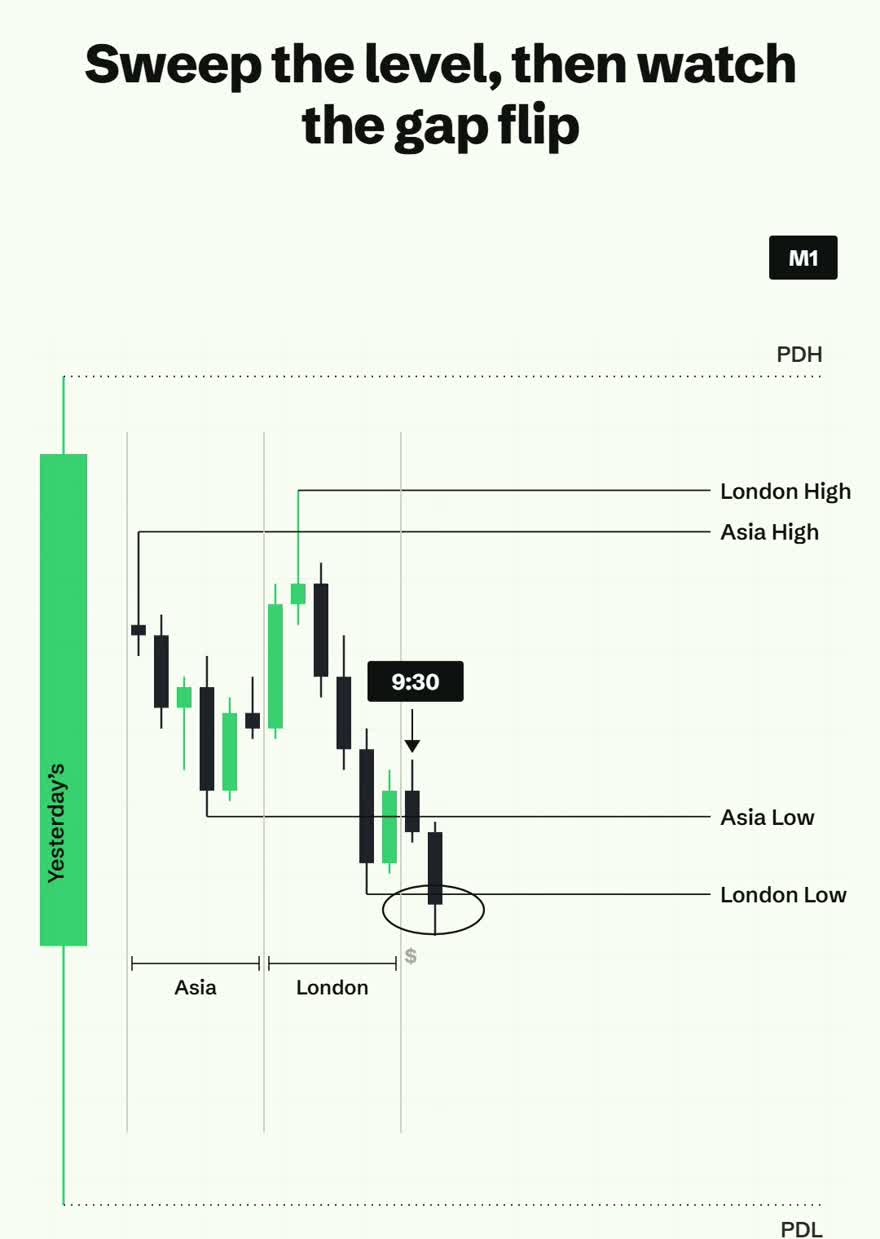
Price reaches down and takes the level. The stops under it get run, and that is the liquidity the move needed. Now watch what price does on the way back up.
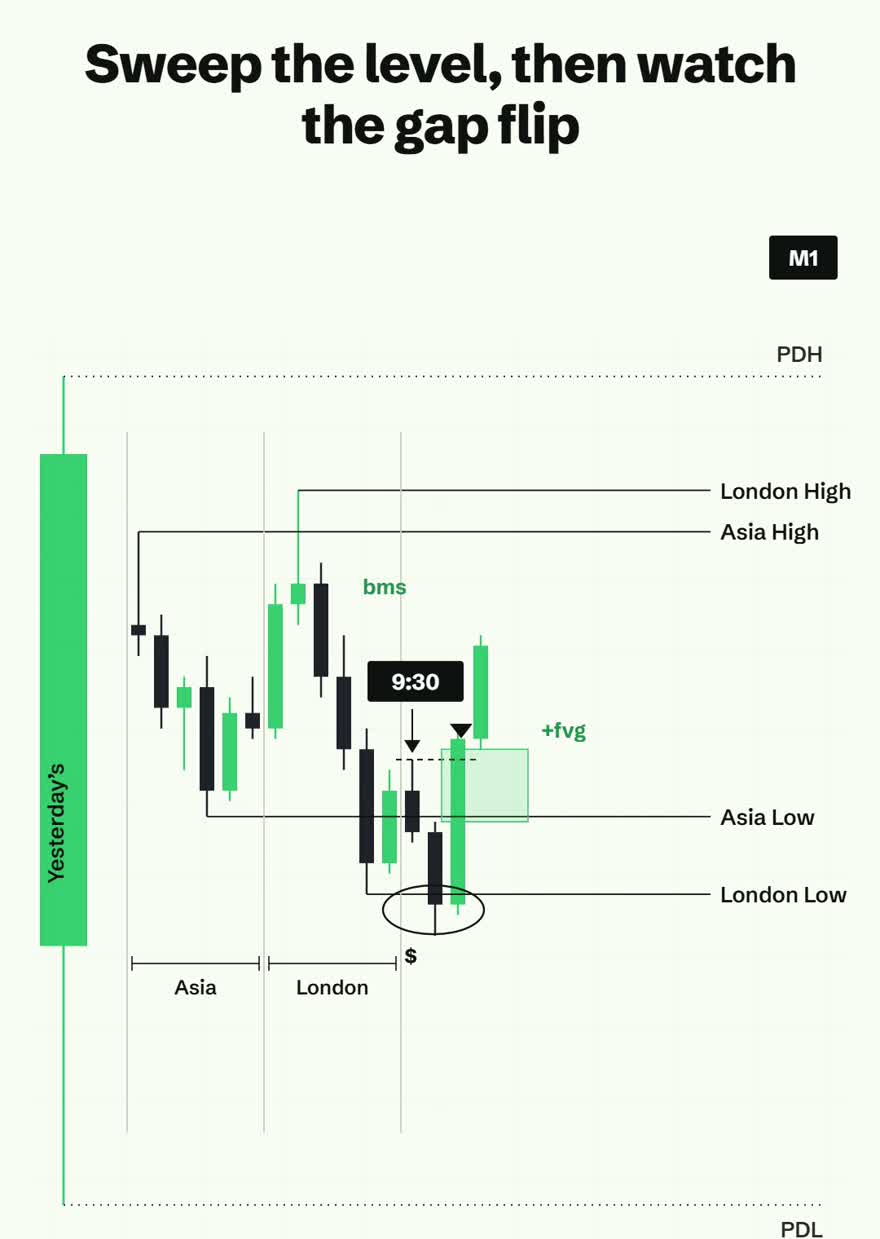
The reaction off the sweep breaks the last short-term high, and on the way it leaves a gap between the wicks. That is your fair value gap, exactly as described earlier in this guide. At this point the textbook trade is to buy the retest of that gap.
The flip
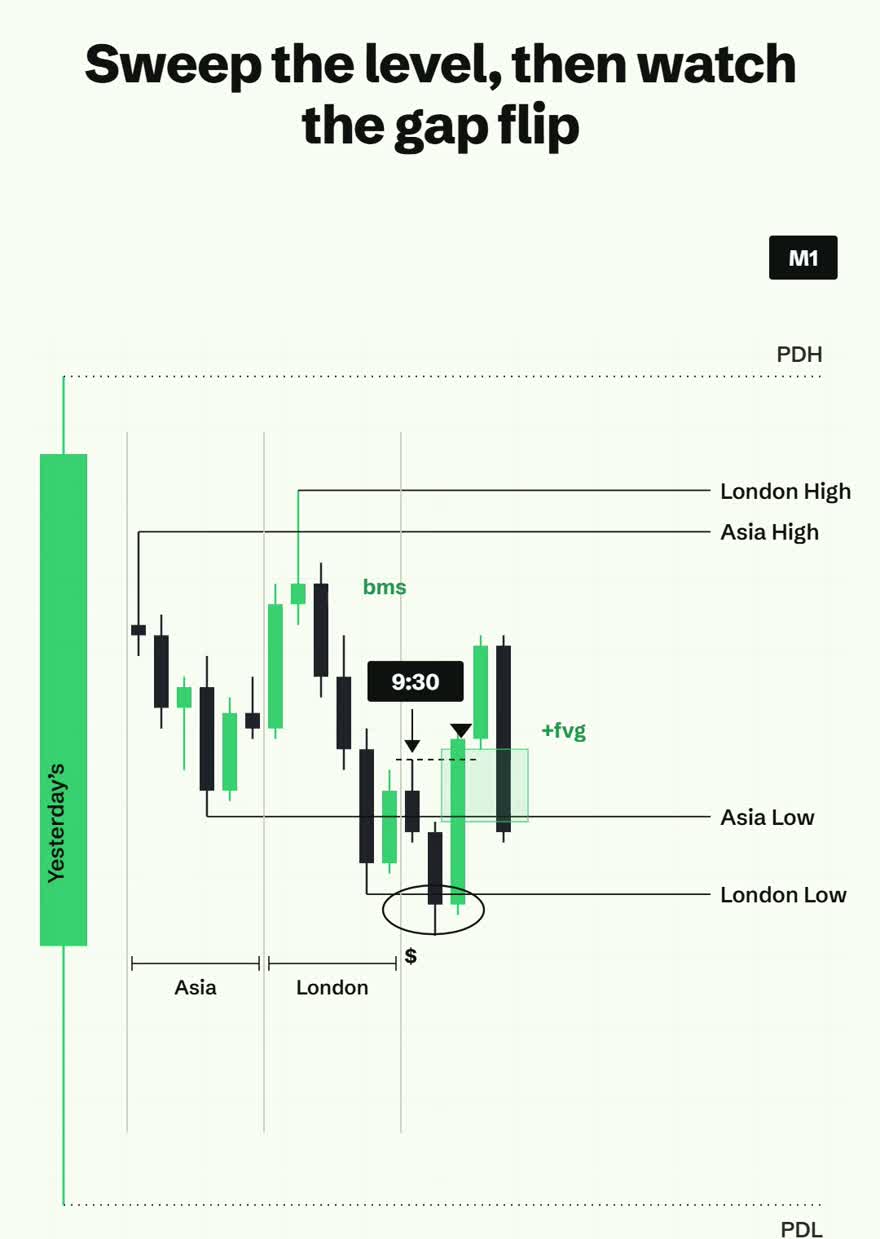
Except price comes back and closes straight through the gap instead of bouncing off it. That is the inversion, usually written as an inverse fair value gap or ifvg. What was holding price up is now pushing it down. The exact same zone, the exact same prices, working in the opposite direction.
This is not a failed setup. It is a signal in its own right, and a strong one. Price went down to grab liquidity, tried to reverse, and could not hold it. The buyers who took that gap long are now underwater, and their stops sit right above.
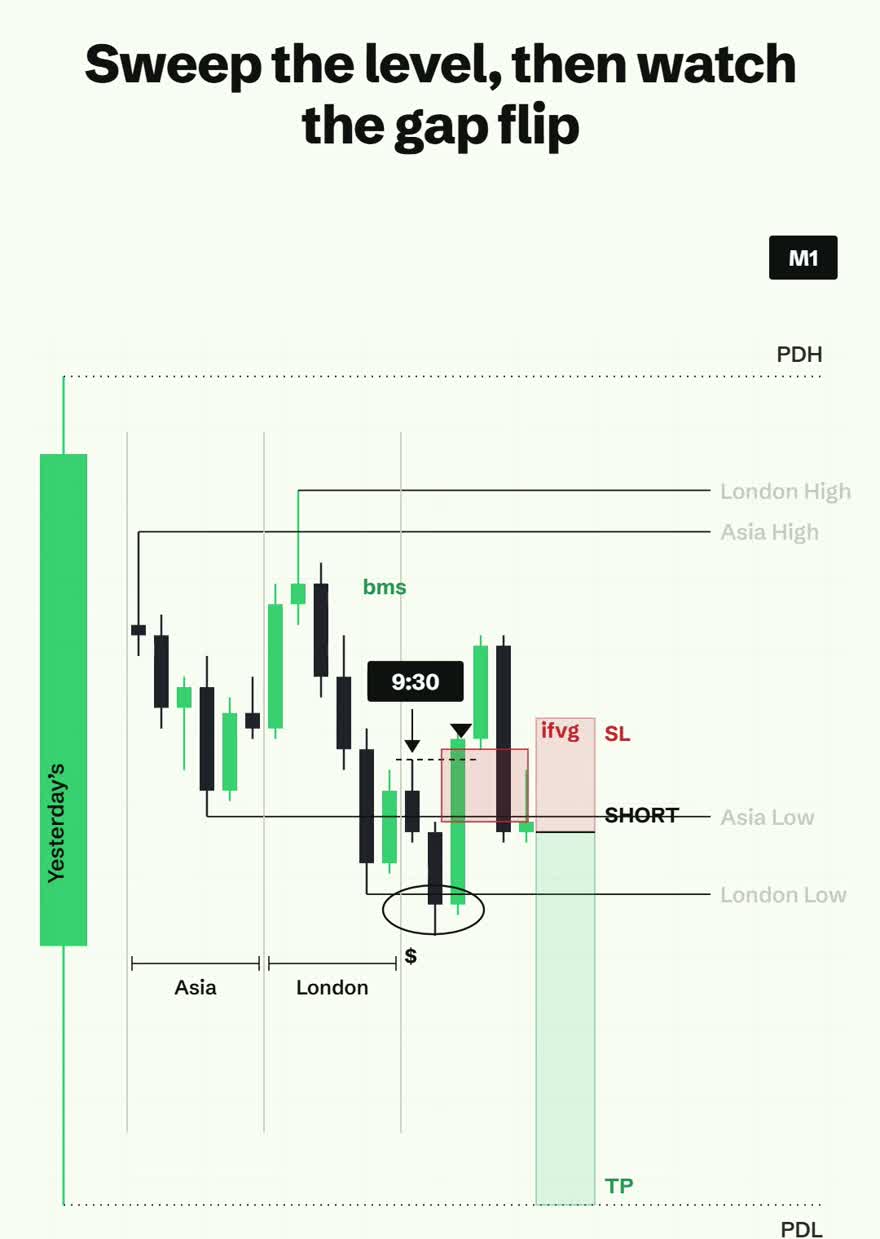
So you trade it the other way. Price retests the flipped gap from below, gets rejected, and you are short. Your stop goes above the gap, because if price reclaims it the inversion was wrong. Your target is the next level you already marked, which here is the previous day low. In this example that is roughly a three to one, and none of it required an opinion about direction beforehand.
When the flip never happens
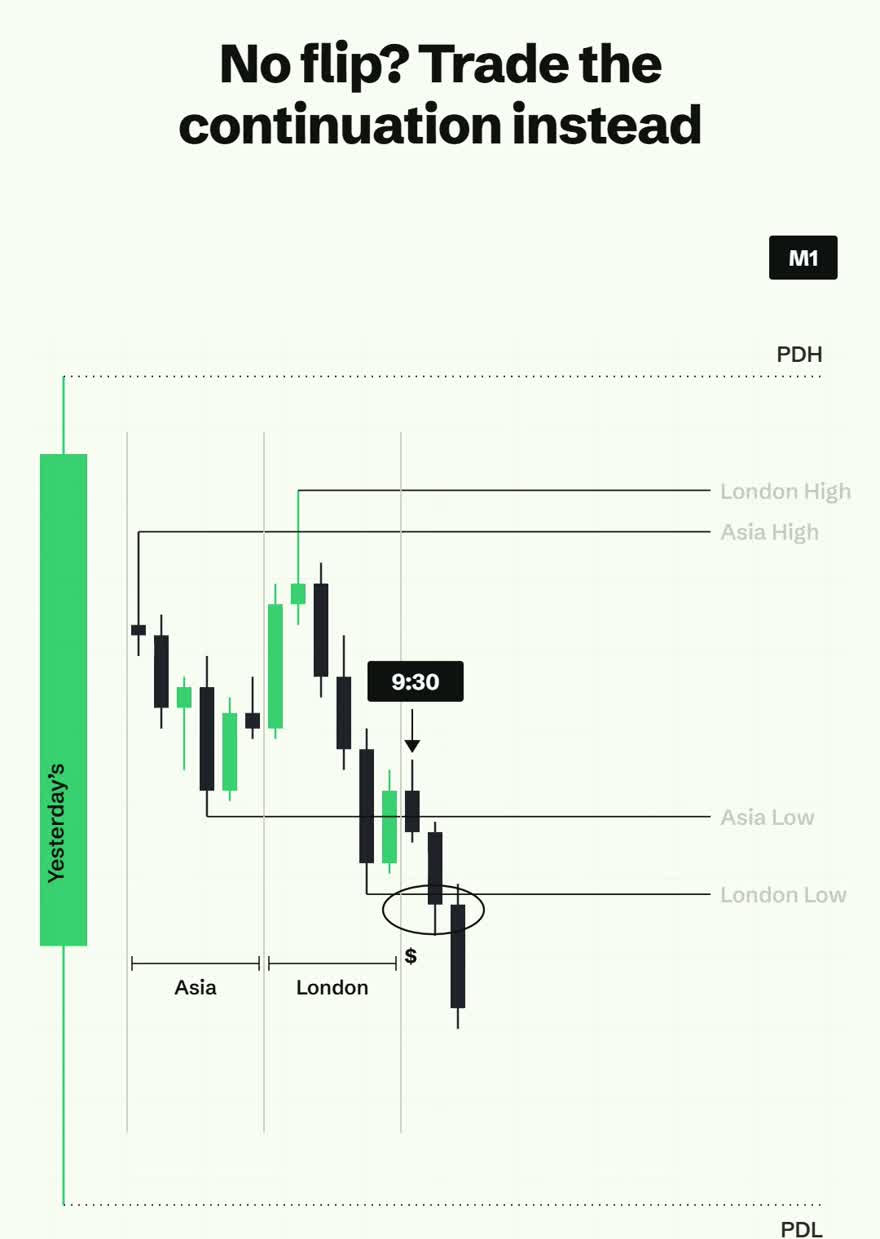
The third case is the simplest. Price takes the level and never gives you a reaction at all. No meaningful rally, no gap worth marking, it just carries on straight through. Traders wait around for a retest that is not coming and miss the move entirely.
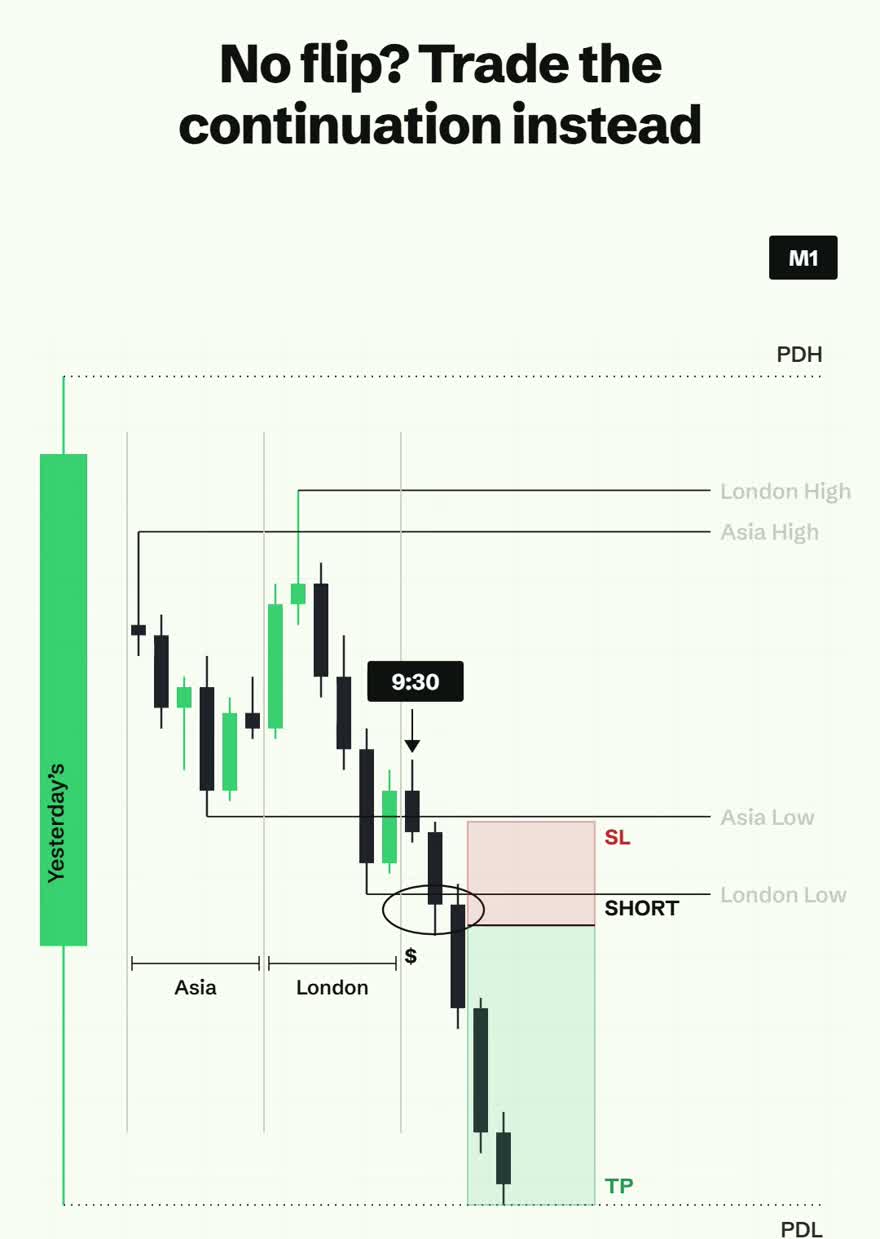
When that happens you take the continuation instead. Entry on the break through the level, stop above the high that swept it, target the next marked level. It is the same trade management as the flip, just without the detour.
Two setups, one set of levels
- Mark yesterday's high and low, and the last session's high and low. Four lines
- Wait for 9:30 New York and let price take one of them
- Watch the reaction, and mark the gap it leaves behind
- If price closes through that gap, it has flipped. Trade the retest in the new direction
- If there is no gap and no reaction, trade the continuation through the level instead
- Either way, stop beyond the sweep and target the next level you already marked
That is the whole thing. Trade what actually happened, not what you thought was going to happen before the session started.
Watch the gap flip explained
Which gaps to actually trade (the full breakdown)
Everything above is how to enter a gap. This part is which gaps deserve your money, and it is the reason most people's fair value gaps keep failing. They are not entering wrong. They are picking the wrong gaps.
Three filters. A gap has to pass all three before it is worth an order.
Rule 1: Only trade gaps that break a swing point
The gap on its own is not the signal. What makes it matter is where it happens. If price rips through a swing high or swing low and leaves a gap doing it, that is real momentum: something forced its way through a level other traders were defending.
A gap that prints in the middle of nowhere, breaking no structure, is just a fast candle. It tells you nothing about who is in control.
Rule 2: Skip gaps that form in sideways chop
When price is ranging, gaps appear constantly and mean nothing. There is no direction behind them, only noise, and they get filled almost every time. That is not bad luck, it is the nature of a range: price keeps rotating back through the middle.
If you cannot say in one sentence which way the market is trying to go, do not trade the gap. Wait for structure to break first, then take the gap that breaks it.
Rule 3: A gap that gets traded back through is not always a failure
Here is the one that catches people out. A gap takes out a swing, then price comes back and trades fully through that gap. Most people mark it as a failed setup and move on.
It is not a failure. It is an inversion gap, and it is information: the market just told you it is reversing. That gap has flipped polarity. What was support is now resistance, and the level you were going to buy is now a level to sell from.
So you do not delete it from your chart. You flip it, and you trade the other side.
Putting the filter together
- Breaks a swing point? If no, skip it.
- Clear direction, not chop? If no, skip it.
- Traded fully back through? Then stop treating it as support. It has inverted, trade it the other way.
Pass all three and you are back at the entry method further up this page: wait for the retrace into the gap, stop beyond the swing that created it, target at least two to one. The filter decides whether you trade. The entry method decides how.
Before you trade it
Drill the retest entry on the free entry trainer, check every live setup against the pre-trade checklist, and build the foundations with the free beginner course if you need them. Then 20 demo trades before a cent of real money.
Try trading free, $10,000 virtual demo →Frequently asked questions
Why do breakout entries keep failing?
What is a fair value gap entry?
How do I identify a fair value gap?
What if price never retests the gap?
What is consequent encroachment?
What is an inverted fair value gap?
Why do my fair value gap trades keep failing?
What risk to reward should I use on these entries?
What is an inverse fair value gap?
Is a broken fair value gap a failed setup?
What do I do if no gap forms after the sweep?
Do I need a daily bias to trade fair value gaps?

Keep learning
New to trading entirely? Start with the free beginner course: 20 short lessons from zero to your first demo trade.